


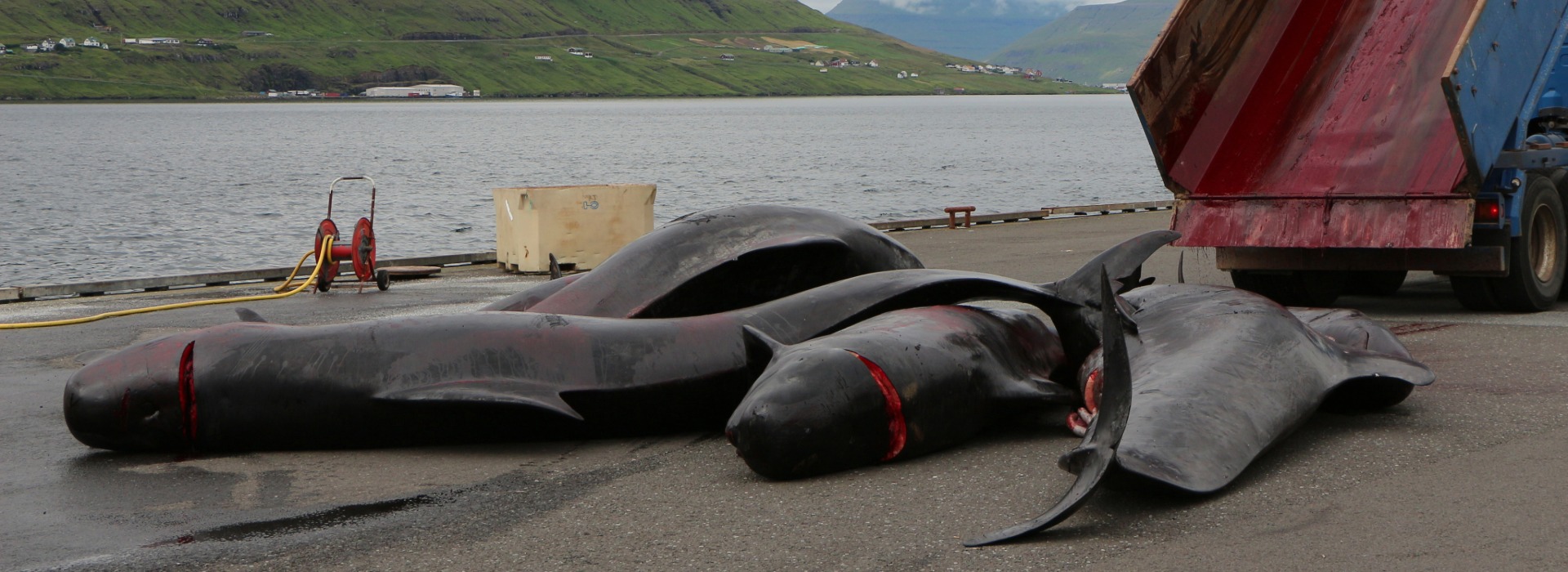
Whaling
Whales are highly evolved, social, and sentient beings. Hunting them causes immense suffering that cannot be justified by any economic or so-called traditional argument. From the perspective of animal welfare, species conservation, and ecology, commercial whaling and small-scale whale drives are unacceptable and cruel practices.
History of whaling
What began in medieval Europe as a daring form of hunting in coastal waters evolved in the late 19th century and throughout the 20th century, driven by technological developments such as the explosive harpoon and factory ships, into a highly efficient killing machine that brought global whale populations to the brink of extinction. Before the discovery of petroleum, whales essentially served as reservoirs of raw materials: blubber (whale oil derived from the animals’ soft layer of fat) was used as fuel for lamps and lanterns, while baleen (the filtering apparatus in the mouths of baleen whales) was used as the «plastic of the Middle Ages» for corset stays and umbrella ribs. Sperm whales, in particular, were regarded as sources of some of the most expensive and valuable raw materials in the 18th and 19th centuries. The oily substance found in the animals’ heads, known as spermaceti, was made into high-quality candles, while ambergris, produced in the whales’ digestive tracts, was highly sought after by the perfume industry.
The historical catch databases of the International Whaling Commission (IWC) record a total of 2.9 million whales killed during the 20th century, before the worldwide moratorium on commercial whaling came into effect. This figure nevertheless represents a lower bound, as the catch statistics are incomplete. Many large whale species were on the verge of biological extinction. The hunting of the giants of the sea reduced global populations of blue whales, humpback whales, North Atlantic right whales, and the Pacific population of gray whales by more than 90%. The Atlantic population of gray whales was wiped out entirely.
Hunting of baleen whales
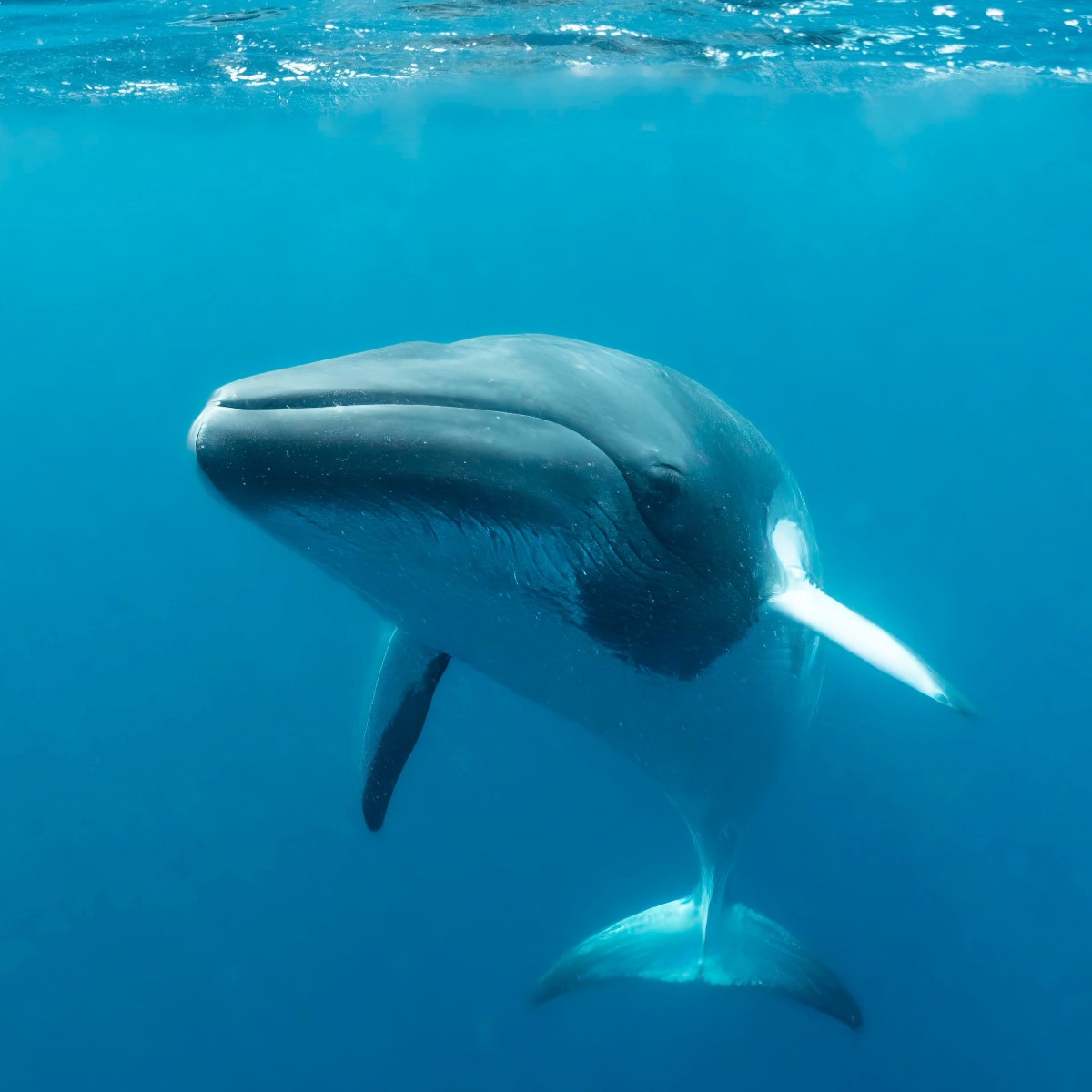
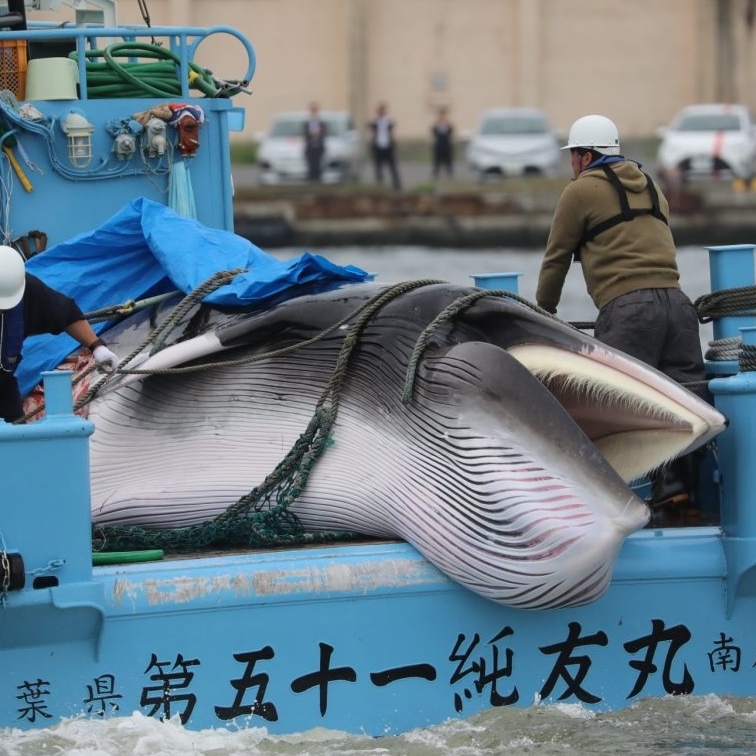
Although the IWC moratorium internationally prohibits commercial whaling of baleen whales, Norway, Japan, and Iceland continue to hunt whales commercially. Norway and Iceland are members of the IWC but refuse to recognize the whaling moratorium. Japan withdrew from the IWC in 2019 and has since officially resumed commercial whaling, after killing whales for years under the guise of scientific research. In 2026, the government-set catch quotas for large whales are as follows: Norway has set a quota of more than 1,600 minke whales; Japan has set a combined quota of more than 400 baleen whales (fin, sei, Bryde’s, and minke whales); and Iceland has set a combined quota of more than 300 baleen whales (fin and minke whales).
Hunting of small cetaceans
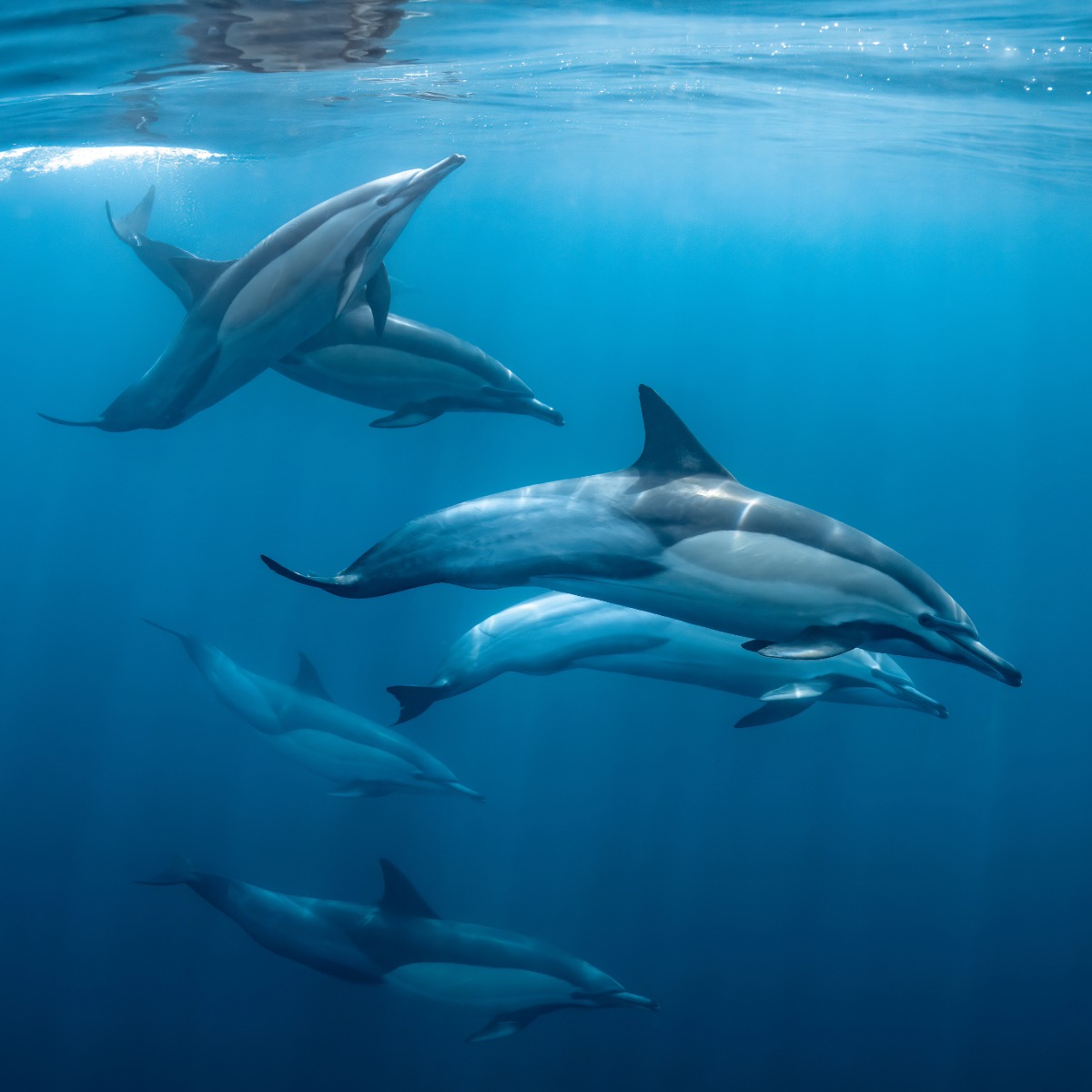
An estimated more than 100,000 small cetaceans are deliberately killed worldwide every year. In particular, toothed whales, which include many small cetacean species, live in close-knit family groups. Hunting disrupts these social bonds, traumatizes the surviving animals, or can wipe out entire whale families. Examples include:
Dolphins are killed every year in countries such as Peru and Ghana, as well as in the Amazon Basin, and their meat is used as bait in commercial and illegal fishing.
In West Africa, the trade in so-called «aquatic wild meat» (marine bushmeat) is booming. Thousands of dolphins are killed every year and sold as a source of protein, as fish stocks in coastal waters have been depleted by industrial trawlers.
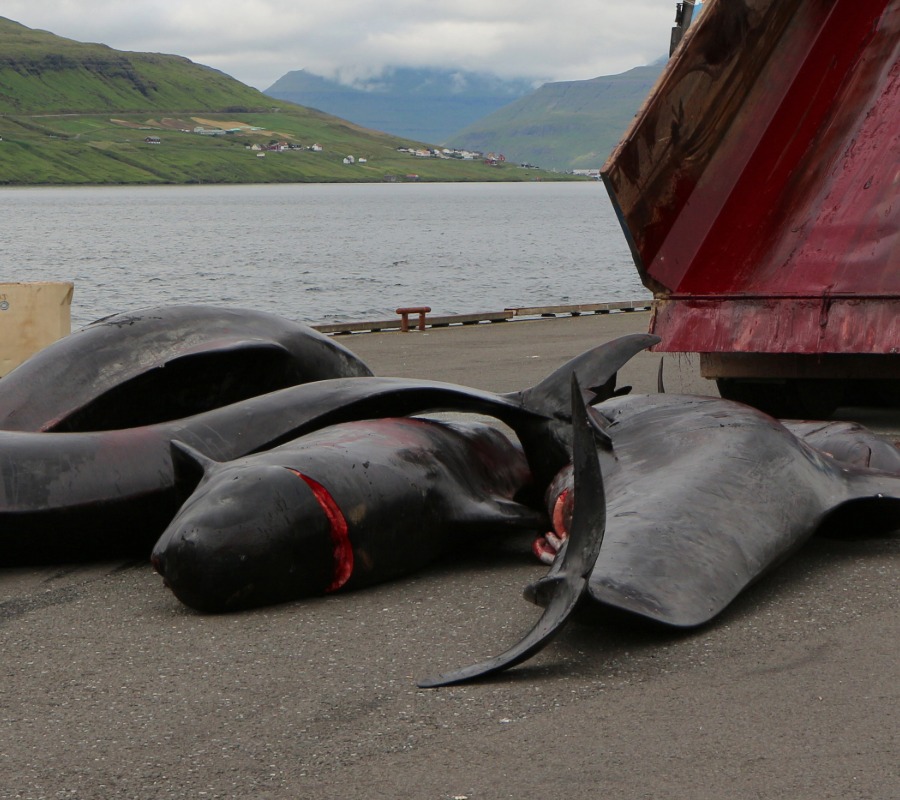
For reasons presented as traditional, the notorious small-cetacean drives take place every year in the Faroe Islands (an autonomous island group within the Kingdom of Denmark) and in Japan. In the so-called «Grindadráp» in the Faroe Islands, several hundred to more than 1,000 pilot whales and other dolphin species are killed each year. In Japan’s coastal waters, several thousand small cetaceans are killed annually, while some are captured alive for sale to dolphinariums.
Cruel and subsidized waste of life
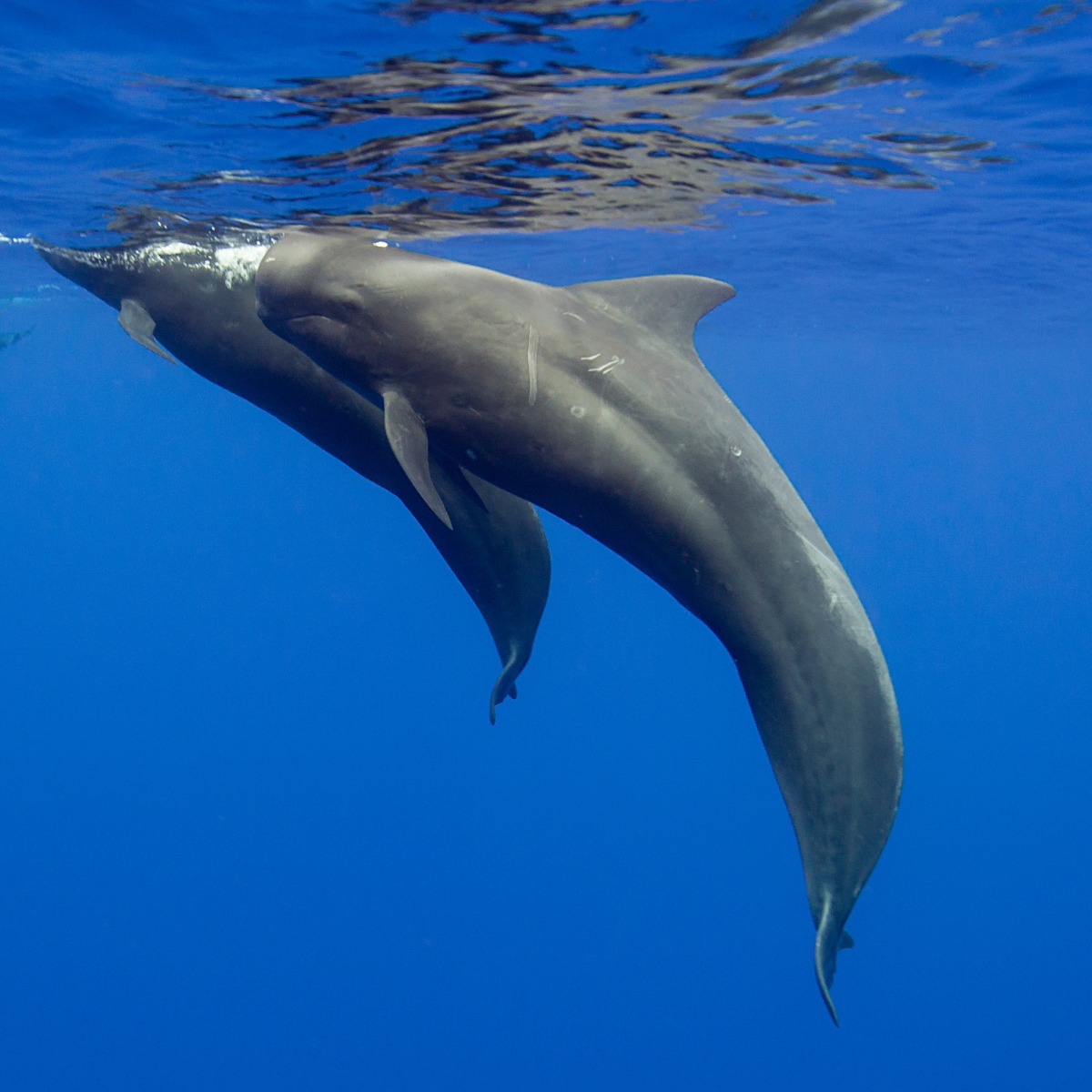
Whales and dolphins have a highly developed capacity for awareness and pain perception, and their cognition, communication, and culture form the foundation of some of the most complex non-human social structures on our planet.
Hunting whales and dolphins causes immense suffering, as there is no painless and instantaneous method of killing them. The explosive heads of harpoons cause severe injuries and mutilation, and harpooned whales endure a prolonged and agonizing struggle to die – lasting anywhere from several minutes to more than an hour – as they bleed to death, suffocate, or drown. Severing the spinal cord, as is done during small-cetacean drives, likewise subjects the animals involved to prolonged and indescribable suffering.
Commercial whaling and small-cetacean drives also contribute to the destruction of whale cultures. Not only do the commercial whaling nations accept all of this as a consequence, but the industry is also subsidized. The products themselves, however, are harmful to human health due to the high levels of mercury found in whale meat. At the same time, demand for whale meat in the remaining commercial whaling nations has been declining for years. The growing surplus of whale meat is sometimes processed into animal feed, placed in storage, or marketed to tourists. Tourists often order the meat out of sheer curiosity and the mistaken belief that it is a traditional local delicacy. In doing so, they can unintentionally become major drivers of consumption.
Tip for whale conservation in everyday life
Avoid consuming meat from baleen or toothed whales altogether – both while traveling and on any other occasion.
Protecting whales and dolphins
Protecting whales and dolphins goes far beyond animal and species conservation alone, as they play a central ecological role. They are fundamental to the marine nutrient cycle and to global climate regulation. Their feces are rich in essential nutrients, and when released near the ocean’s surface, they act as fertilizer for phytoplankton. These microscopic algae are, on the one hand, a food source for tiny organisms such as krill at the base of the food chain. On the other hand, through photosynthesis, they produce a large share of the oxygen in our atmosphere.
Whales and dolphins are also enormous carbon stores. A single baleen whale stores at least 1,000 times more carbon in its biomass over the course of its lifetime than a tree. Protecting whales and dolphins therefore also means actively protecting marine biodiversity and the climate.
Baleen and toothed whales are still being hunted on a massive scale instead of being protected. This is shameful and scandalous. The killing of whales and dolphins is ecologically and biologically unsustainable, extraordinarily cruel, and a crime against whale communities. We must finally put an end to commercial whaling and the killing of small cetaceans.
The targeted hunting of whales and dolphins is just one of the threats they face today. Hundreds of thousands die every year as bycatch in commercial fishing nets, while ghost nets and fishing lines injure and kill countless marine mammals. The dramatic warming of the oceans, collisions with ships, and acoustic, chemical, and physical pollution of their habitat place enormous pressure on marine mammals.
Petition against whaling
KYMA is part of the international «End Commercial Whaling» coalition. Together with our partner organizations, we are fighting to end the senseless killing of cetaceans. Support us by signing the petition to end commercial whaling!
Petition against whaling
KYMA is part of the international «End Commercial Whaling» coalition. Together with our partner organizations, we are fighting to end the senseless killing of cetaceans. Support us by signing the petition to end commercial whaling!
Good to know

Whaling
The term generally refers to the hunting of great whales. Great whales include all baleen whales as well as the sperm whale.
International Whaling Commission (IWC)
The IWC was founded in 1946 by 14 countries. Its original goal was to regulate catch quotas for great whales so that populations would not collapse completely and the animals could continue to be hunted. Over the years, more and more countries joined the Commission, and the focus on protecting great whales and, to some extent, small cetaceans, grew stronger in response to the wide range of threats whales and dolphins face today. Today, the Commission has more than 85 member countries.
Whaling moratorium
The moratorium took effect in 1986 under the auspices of the International Whaling Commission (IWC). It represents an international ban on commercial whaling and applies exclusively to great whales. The hunting of small cetaceans is not covered and therefore remains largely unregulated at the international level.
With regard to great-whale hunting, the IWC recognizes three categories: commercial whaling, aboriginal subsistence whaling, and scientific whaling. For aboriginal subsistence whaling, the IWC sets quotas for the number of great whales that Indigenous peoples in certain regions may hunt for subsistence purposes (approximately 300 to 400 whales worldwide, for example in Alaska and Siberia). Scientific whaling must be submitted to the IWC and approved by the Commission.
«Whale Fall»
When a whale dies, its carcass sinks to the deep seafloor. The carbon stored in its body is thereby removed from the atmosphere for centuries. In addition, its body provides an important source of food for countless organisms in the deep sea, helping to sustain their survival.
Good to know
Walfang
Der Begriff beschreibt üblicherweise die Jagd auf Grosswale. Zu den Grosswalen werden alle Bartenwale sowie der Pottwal gerechnet.
Internationale Walfangkommission (IWC)
Die IWC wurde 1946 von 14 Staaten gegründet. Ihr ursprüngliches Ziel war es, die Fangquoten auf Grosswale so zu regulieren, dass die Bestände nicht komplett kollabieren und die Tiere weiterhin bejagt werden könnten. Im Laufe der Jahre traten immer mehr Staaten der Kommission bei und der Schutzgedanke für Gross- und teilweise auch Kleinwale wurde gewichtiger angesichts der Vielfalt von Gefahren, denen die Waltiere heute ausgesetzt sind. Heute gehören der Kommission über 85 Mitgliedstaaten an.
Whaling moratorium
The moratorium took effect in 1986 under the auspices of the International Whaling Commission (IWC). It represents an international ban on commercial whaling and applies exclusively to great whales. The hunting of small cetaceans is not covered and therefore remains largely unregulated at the international level.
With regard to great-whale hunting, the IWC recognizes three categories: commercial whaling, aboriginal subsistence whaling, and scientific whaling. For aboriginal subsistence whaling, the IWC sets quotas for the number of great whales that Indigenous peoples in certain regions may hunt for subsistence purposes (approximately 300 to 400 whales worldwide, for example in Alaska and Siberia). Scientific whaling must be submitted to the IWC and approved by the Commission.
«Whale Fall»
When a whale dies, its carcass sinks to the deep seafloor. The carbon stored in its body is thereby removed from the atmosphere for centuries. In addition, its body provides an important source of food for countless organisms in the deep sea, helping to sustain their survival.